
In a village outside Kota Bharu, a master wau-maker works to preserve Kelantan’s time-honoured kite tradition and pass it on to younger hands
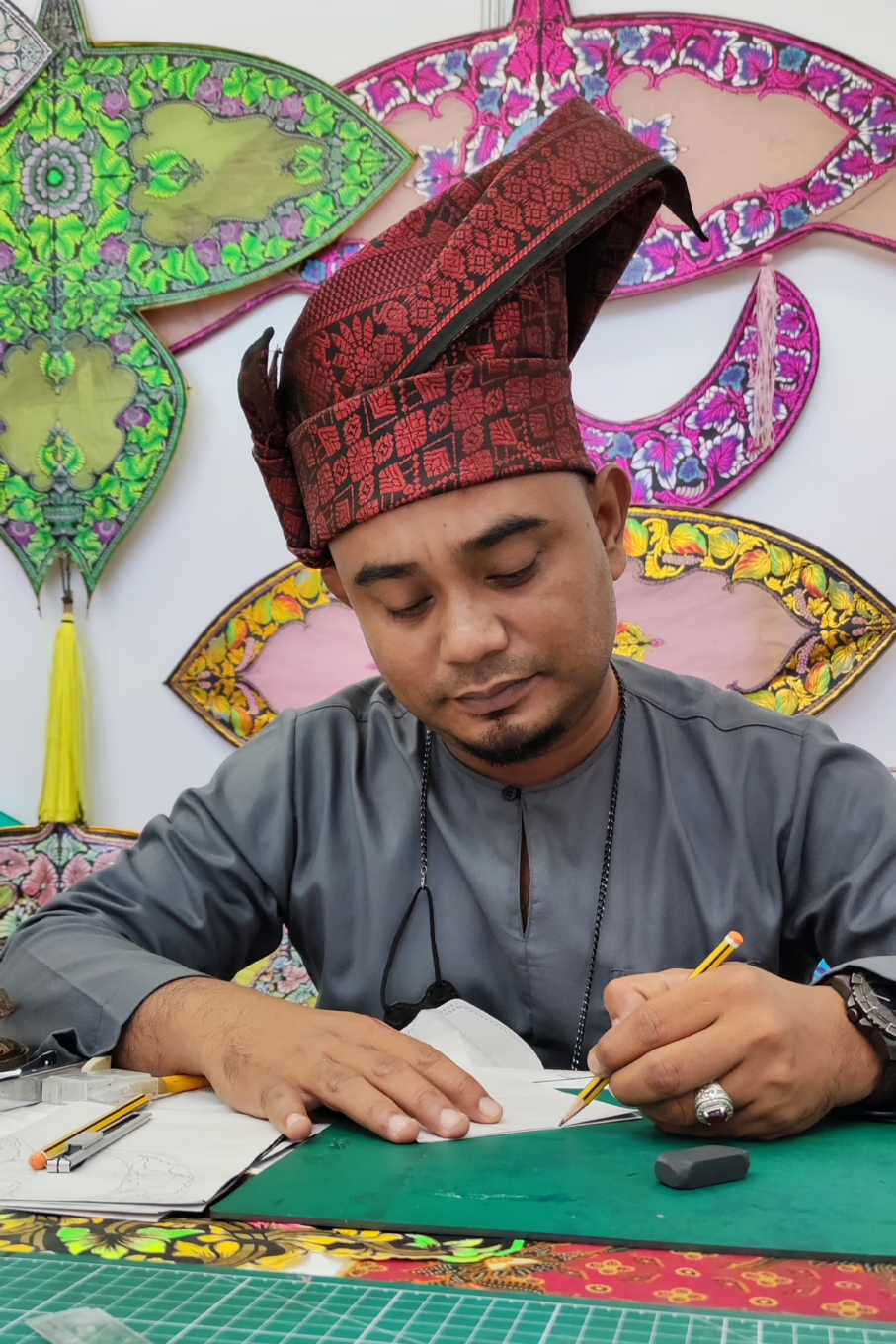
About 3km outside Kota Bharu, in the village of Kampung Pintu Geng, Haniff Salleh is working hard to keep an old craft alive. He is one of the few remaining wau-makers in Kelantan – and among the youngest at 42 years old – practising an art form that demands years of patience to master, at a time when modern, fast-paced lifestyles leave little room for the attention and dedication it requires.
His gallery and workshop space, Basawa, sits next to his family’s 1970s wooden house, one of the last still standing in a neighbourhood that’s increasingly rebuilt in brick. It is here that he builds the intricately decorated kites, receives visitors and speaks about a tradition he fears may not survive him. Founded in 2019 and named after the Kelantanese shorthand for a wau hut, the space also gathers young apprentices and travellers curious about the craft.
“I learned to make the wau, A to Z, from my late grandfather when I was still in primary school,” Haniff recalls. By then, the elder Ideris was already a respected figure in the village, known not only for his kites but also for leading community sports and traditional pastimes such as gasing pangkah, a form of competitive top-spinning in which players strike an opponent’s top.
He was especially famous for crafting giant kites that drew attention wherever they flew. Haniff smiles at the memory, pride softening his voice. His grandfather, he says, was strict; he insisted on minat, a deep, abiding interest, and ketelitian, an almost obsessive attention to detail. Without genuine passion, he would remind Haniff, “dok buleh nok perjuang seni wau”: there could be no fighting for the art, no carrying it forward.
There are more than 10 types of wau found across Malaysia, the best known ones being Wau Bulan, Wau Kucing, Wau Jala Budi and Wau Puyuh. “When Wau Bulan was designated the national kite,” Haniff explains, “Wau Puyuh was elevated as Kelantan’s emblem. The kite is called such because its tail is shaped like the face of a quail, while the tips of its wings resemble the bird’s tail in full spread. When flown, it produces a humming sound and requires real skill to keep it in the air.”
The art of making wau
Haniff has been making Wau Puyuh all his life. The process begins with sourcing bamboo for the frame, a material that has grown increasingly difficult to find near his village. These days, he pays to have it brought in from Kuala Krai, about 70km from the village, then leaves the stalks to dry for about a month before they can be shaped.
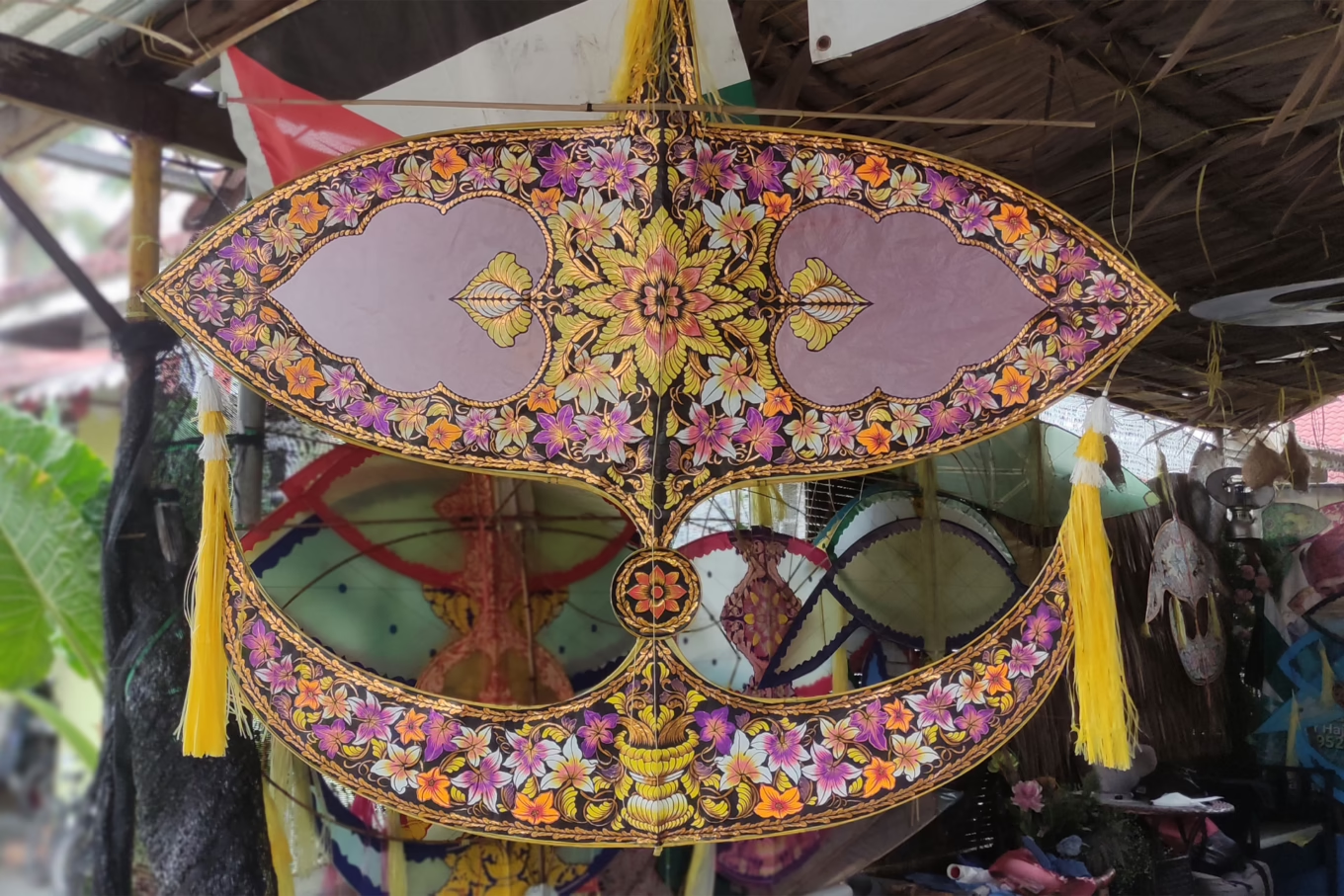
With the frame complete, he turns to the motifs, often inspired by creeping plants. This process can take weeks. Using teknik sobek, a cut-and-layer method in which material is shaped with a special tool and arranged to create texture and depth, he builds the decorative elements on plastic or, at times, paper. Plastic withstands the elements better and has become the more practical option.
Yet tradition governs every stroke. “I can’t simply draw the motifs,” he says. “I have to follow the art and its rules.” Symmetry, refinement and harmony of colour are not mere preferences; they are the hallmarks of high Malay aesthetics and the measure by which a wau-maker’s skill is judged.
Haniff works on his kites full-time, often starting at 2am, after friends drift home and Basawa grows quiet with the tinkling of tools and the aroma of coffee. He gave up his full-time job as a car salesman during the pandemic when interest in traditional wau began to grow. After sharing videos of his craft online, he quickly began receiving enquiries. Today, he produces around five kites a month, sometimes more, depending on demand.
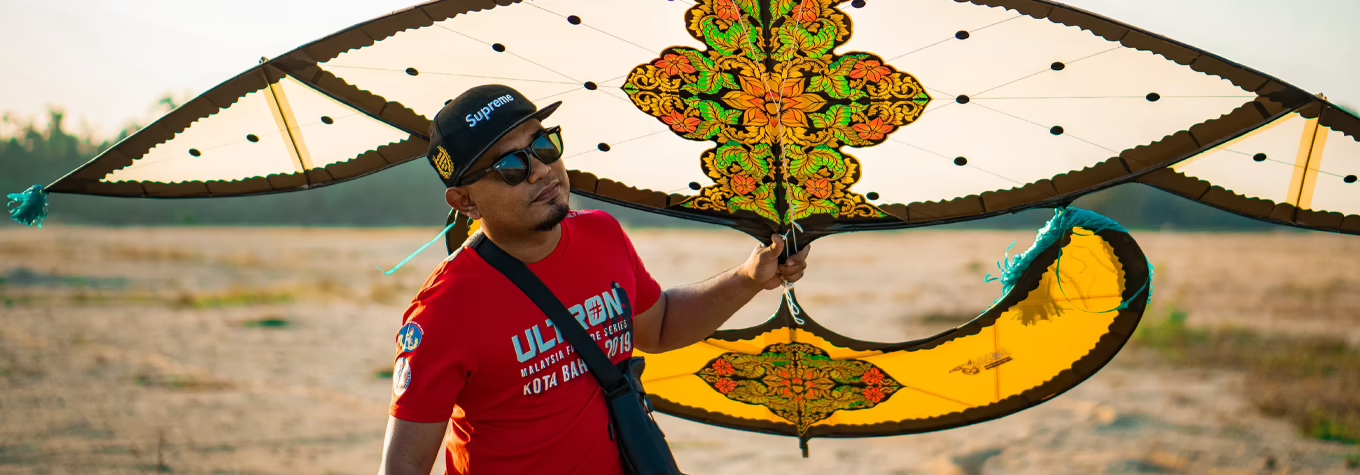
His clientele is largely made up of urban professionals from all walks of life, many from the Klang Valley and other parts of Malaysia. He has a fair share of clients from abroad too, including the United Kingdom, China, Japan, Korea and Thailand. Brands, too, have taken notice. In a 2025 Malaysia Day campaign with GWM Malaysia, a GWM Tank 300 launched a 10ft wau crafted by Haniff into the sky at Pantai Bagan Lalang in Selangor. The spectacular feat earned him recognition in The Malaysia Book of Records.
For Haniff, survival of the craft rests in younger hands. During school holidays, he runs workshops for children. “It is a tedious process, and kids today don’t always have the patience,” says the father of three. Among his own children, only his youngest has shown genuine interest. “But we must introduce it to them. That is how it continues.”
Events like the annual Kelantan International Wau Festival bring families together to experience wau-making up close. Haniff hopes every child who flies a kite or watches one soar will develop a curiosity strong enough to keep the wau – along with its skills, stories and Kelantanese identity – alive for generations to come.