
Dato’ Azman shares seven watercolour sketches from his personal collection, capturing buildings steeped in Malaysia’s heritage, memory and craftsmanship
True architectural beauty lives in the subtle, hand-crafted details that visitors so often overlook. While grand skylines and towering façades capture immediate attention, the soul of a heritage building only reveals itself when one slows down to observe precise timber joints, hand-laid bricks and weathered stones, shares Dato’ Ar IDr Azman Md Hashim, president of the Malaysian Board of Architects and deputy director general of Public Works.
These elements preserve the human touch of long-passed master craftsmen, allowing their stories to resonate across generations. By shifting focus to a single window, column or textured surface, we begin to truly understand its character.
“Perhaps that is what I hope visitors will experience as well. Slow your pace. Put your phone down for a moment. Walk closer. Look upward. Run your eyes along the textures, the craftsmanship and the small details that most people overlook. Because in the end, architecture is not only about the buildings we see; it is about the stories we discover when we learn to observe,” he adds.
Preserving our national chapters
Malaysia possesses a rich architectural heritage that reflects a vibrant tapestry of cultures, traditions and historical eras. Dato’ Azman channels this heritage into detailed sketches of the country’s most storied buildings. If a young student or traveller is inspired to visit a heritage building after seeing one of his sketches, or notices a structural detail they had completely overlooked before, then the artwork has served its true purpose.
Dato’ Azman hopes that younger architects and students realise that sketching is an essential exercise in learning to observe carefully, understanding spaces on a deeper emotional level and learning to love architecture far beyond the technical constraints of blueprints and digital drawings.
Architecture is a profession ruled by absolute precision, where every line is analysed and refined. Watercolour, however, teaches the exact opposite lesson. Using fluid and spontaneous paint, Dato’ Azman learned to embrace total unpredictability. His philosophy is simple: neither people nor sketches are perfect, and it is often those very imperfections that give a drawing its unique personality.
Before his pen touches the paper, Dato’ Azman spends a long time walking around a building to study it from different angles or studying the place through a photograph if he can’t be there in person. This allows him to visualise the entire composition and colour palette. To guide his hand, he places a single, tiny reference dot at the centre of the page as an anchor for balance. Because he sketches entirely in watercolour, without pencils, rulers or erasers, every line is both his first and final decision. This strict discipline means finding the right viewpoint often takes longer than the drawing itself.
As Malaysia marks another year of nationhood this 16 September, Dato’ Azman shares seven buildings that hold a special place in his sketchbook – each one a chapter in the country’s ongoing story of identity, memory and craftsmanship.
1. Stadthuys, Melaka
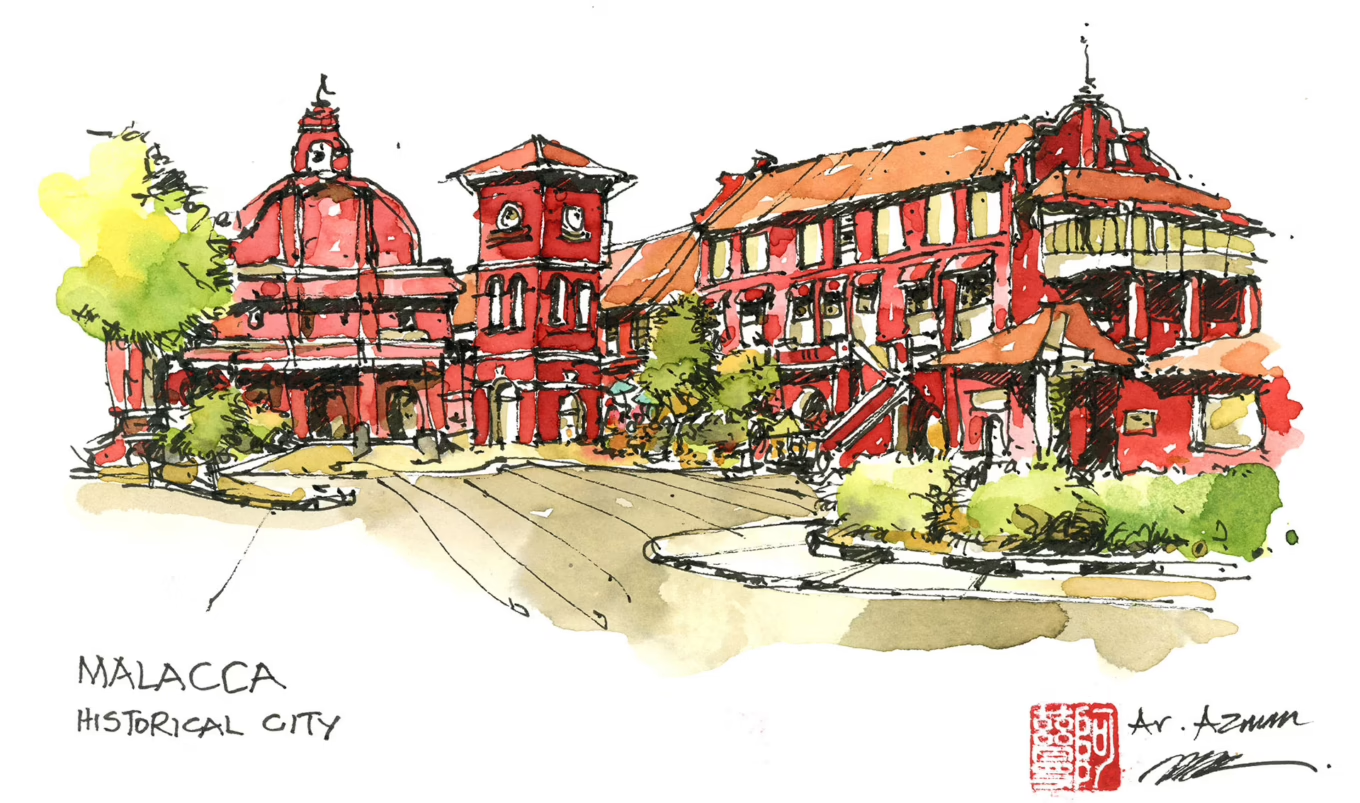
“The greatest challenge is understanding that conservation is not about making an old building look new, it is about allowing it to continue telling its story. Every repair, every replacement and every intervention should respect the building’s authenticity rather than erase the traces of time,” says Dato’ Azman.
As one of Southeast Asia’s surviving examples of Dutch colonial architecture, the Stadthuys remains an iconic landmark.
It has witnessed colonial rule, independence, changing communities and generations of visitors. Its weathered walls, uneven textures and subtle imperfections are not defects; they are chapters of history. “Our responsibility is to strengthen the building where necessary while preserving the evidence of its long journey. A heritage building should never become a replica of itself. It should continue to age gracefully while remaining meaningful to future generations,” he adds.
2. Istana Budaya, Kuala Lumpur

According to him, age alone does not determine heritage value. A building becomes worthy of preservation when it represents the aspirations, identity and achievements of a nation.
Istana Budaya is a contemporary national landmark that celebrates Malaysian culture through architecture. The nation’s premier venue for the performing arts features a striking blue roof inspired by the folded form of the traditional sirih junjung flower arrangement, beautifully blending contemporary architecture with traditional Malay identity.
“Conservation should not begin only after a building becomes 50 or even 100 years old. If a building has already shaped our collective memory and continues to inspire future generations, then its preservation should begin today,” says Dato’ Azman.
3. Bangunan Sultan Abdul Samad, Kuala Lumpur
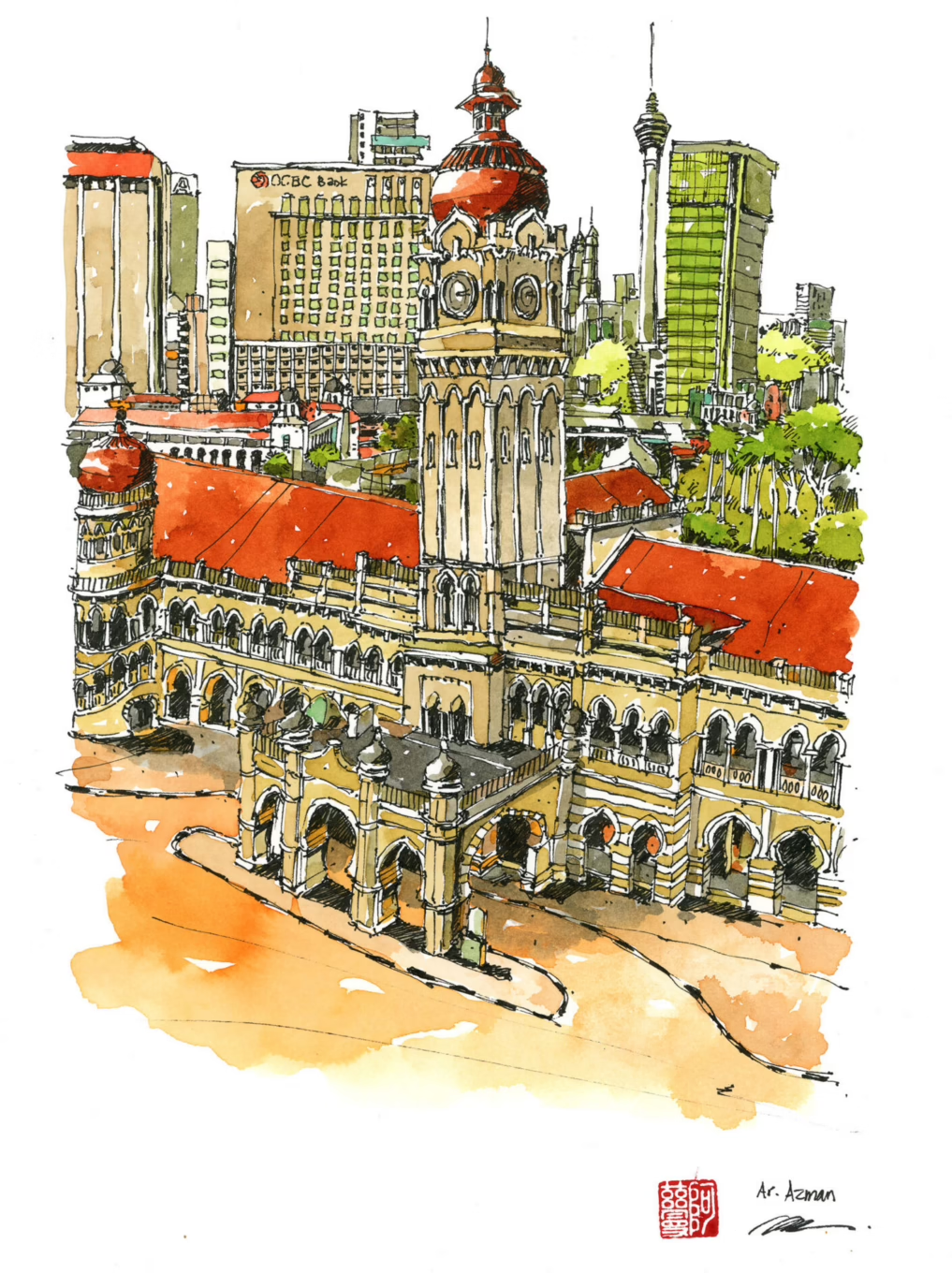
Standing proudly at the heart of the capital, Bangunan Sultan Abdul Samad, with its magnificent Moorish Revival architecture, symbolises an important chapter in the journey towards independence.
Most visitors admire its iconic clock tower and copper domes, but few stop to appreciate the extraordinary craftsmanship that gives the building its character. The carefully proportioned arches, finely detailed brickwork, handcrafted plaster ornamentation and the rhythm of its arcades reveal a level of precision that is difficult to replicate today. These details were created by skilled artisans whose work deserves as much recognition as the building itself.
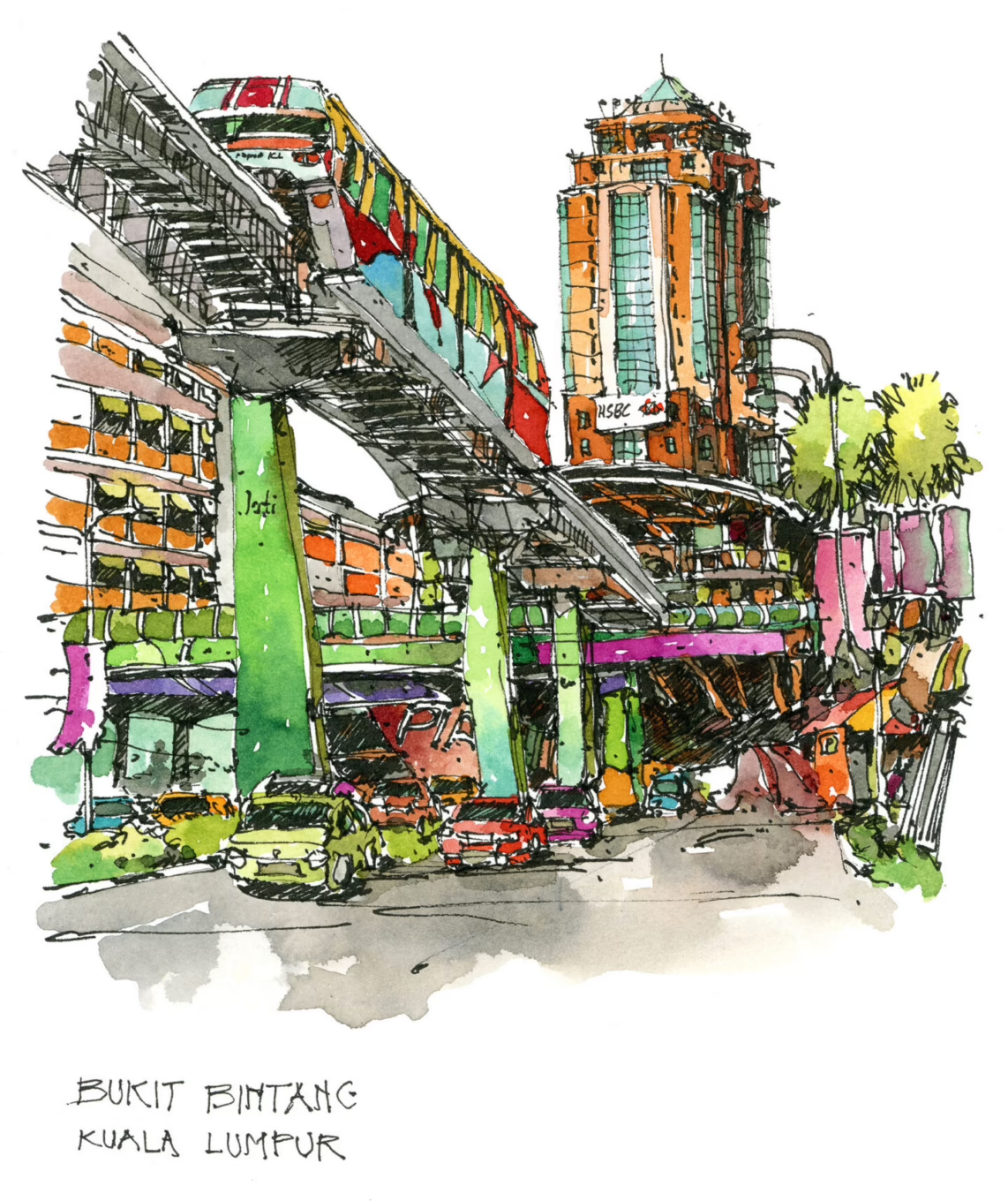
In his sketch, Dato’ Azman deliberately frames this historic clock tower directly against the modern skyline, illustrating how Malaysia’s rich heritage continues to coexist with contemporary progress. “Architecture is often appreciated from a distance. Heritage, however, is discovered when we slow down and notice the details,” says Dato’ Azman.
This appreciation is matched by a broader, ongoing effort to preserve it. The building’s restoration falls under the care of Dana Warisan, a vehicle set up by Khazanah Nasional to redevelop eight nationally significant heritage buildings, among them Seri Negara and the full Bangunan Sultan Abdul Samad (BSAS) KL collective. The entire project is part of Warisan KL, a national urban rejuvenation initiative to revive Kuala Lumpur’s built heritage as a driver of tourism, community enterprise and civic pride.
4. Seri Negara, Kuala Lumpur
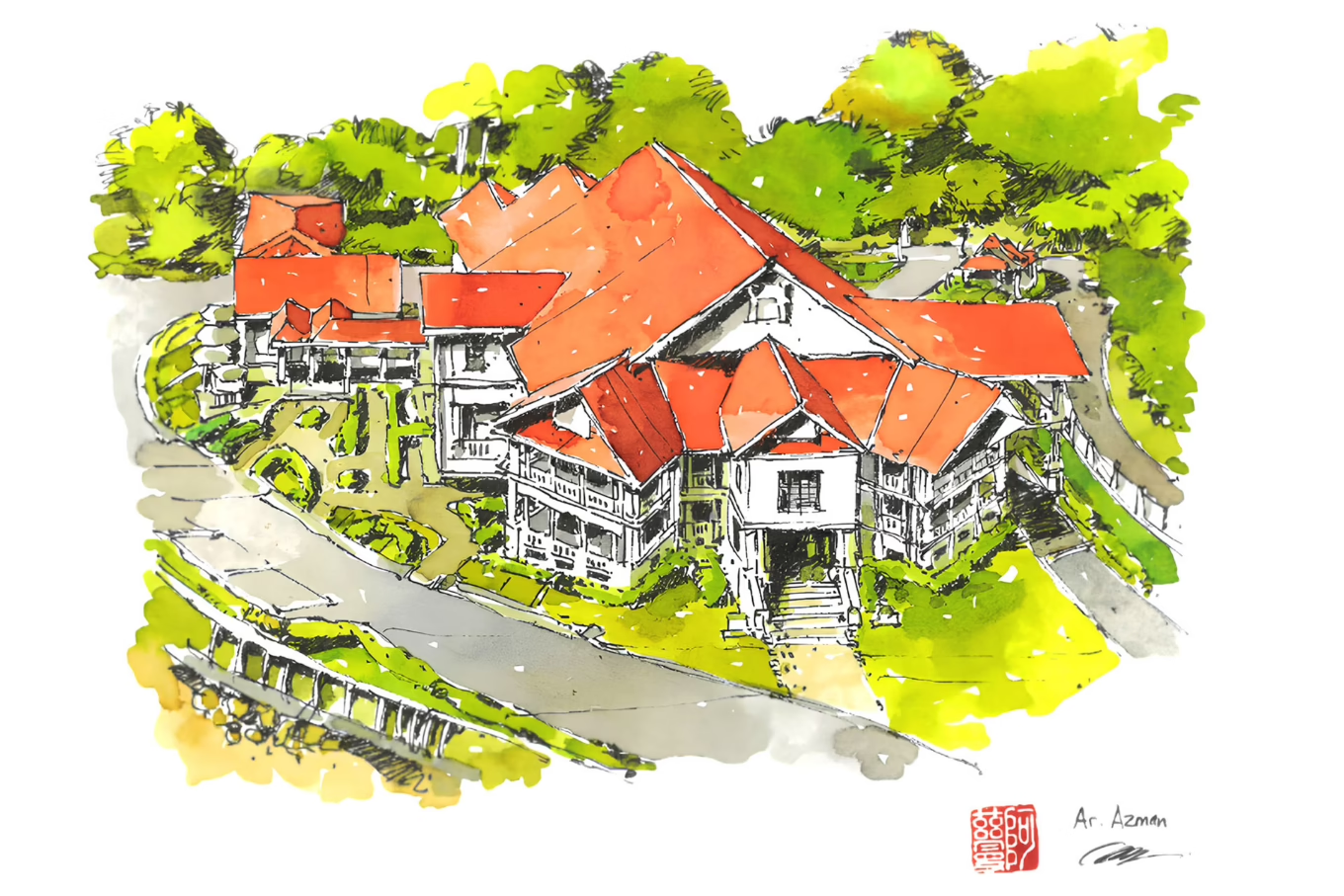
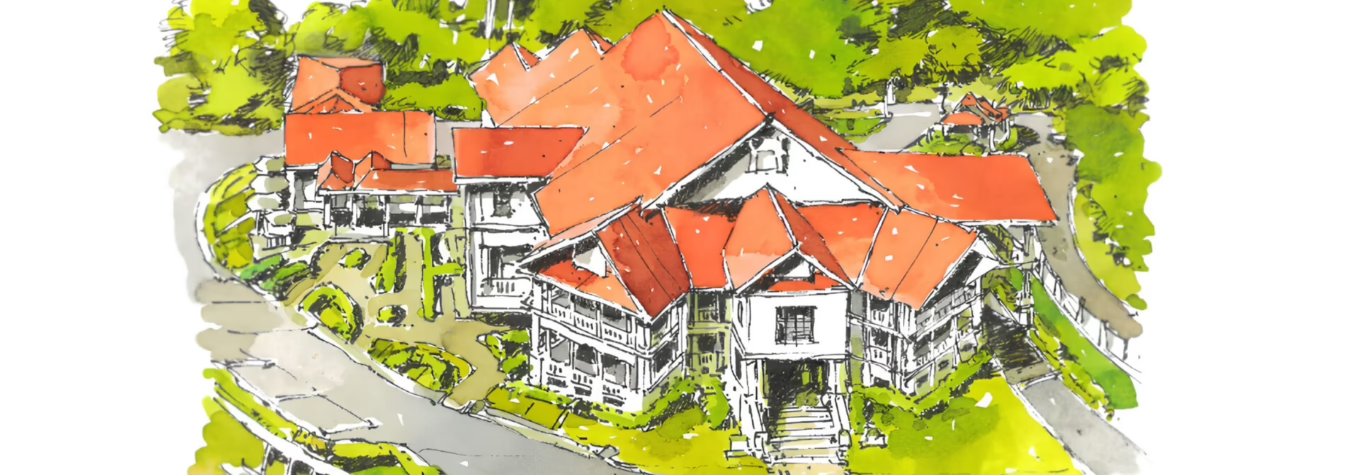
Perched high above the Perdana Botanical Gardens, Seri Negara is a silent witness to Malaysia’s diplomatic and political history. Within its walls, important conversations took place, distinguished guests were received and decisions that influenced the country’s development were made. Architecture becomes heritage not only because of its design, but because of the human stories it has sheltered, shares Dato’ Azman.
“When we preserve places like Seri Negara, we are protecting both the physical building and the memories attached to it. Without these places, history becomes something we only read about rather than something we can still experience,” he says.
5. Masjid Jamek, Kuala Lumpur
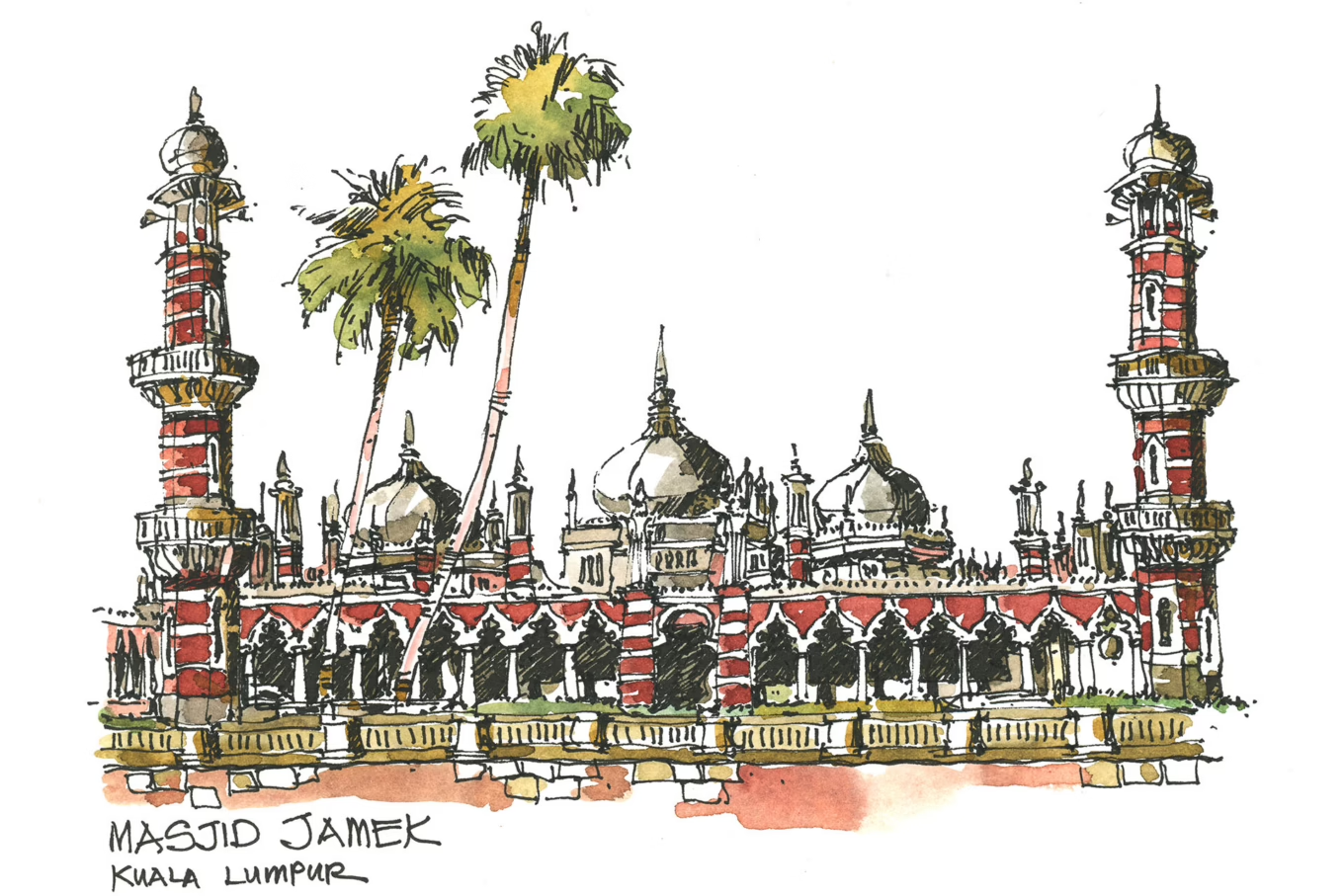
Preservation is about careful management: maintaining historic materials, upgrading facilities sensitively and ensuring that modern interventions never overwhelm the original architecture. Masjid Jamek remains a living place of worship, and its continuous use is part of its significance. Located at the historic confluence of the Klang and Gombak Rivers, the mosque has always fascinated him with its elegant arches and slender minarets.
6. Kellie’s Castle, Perak
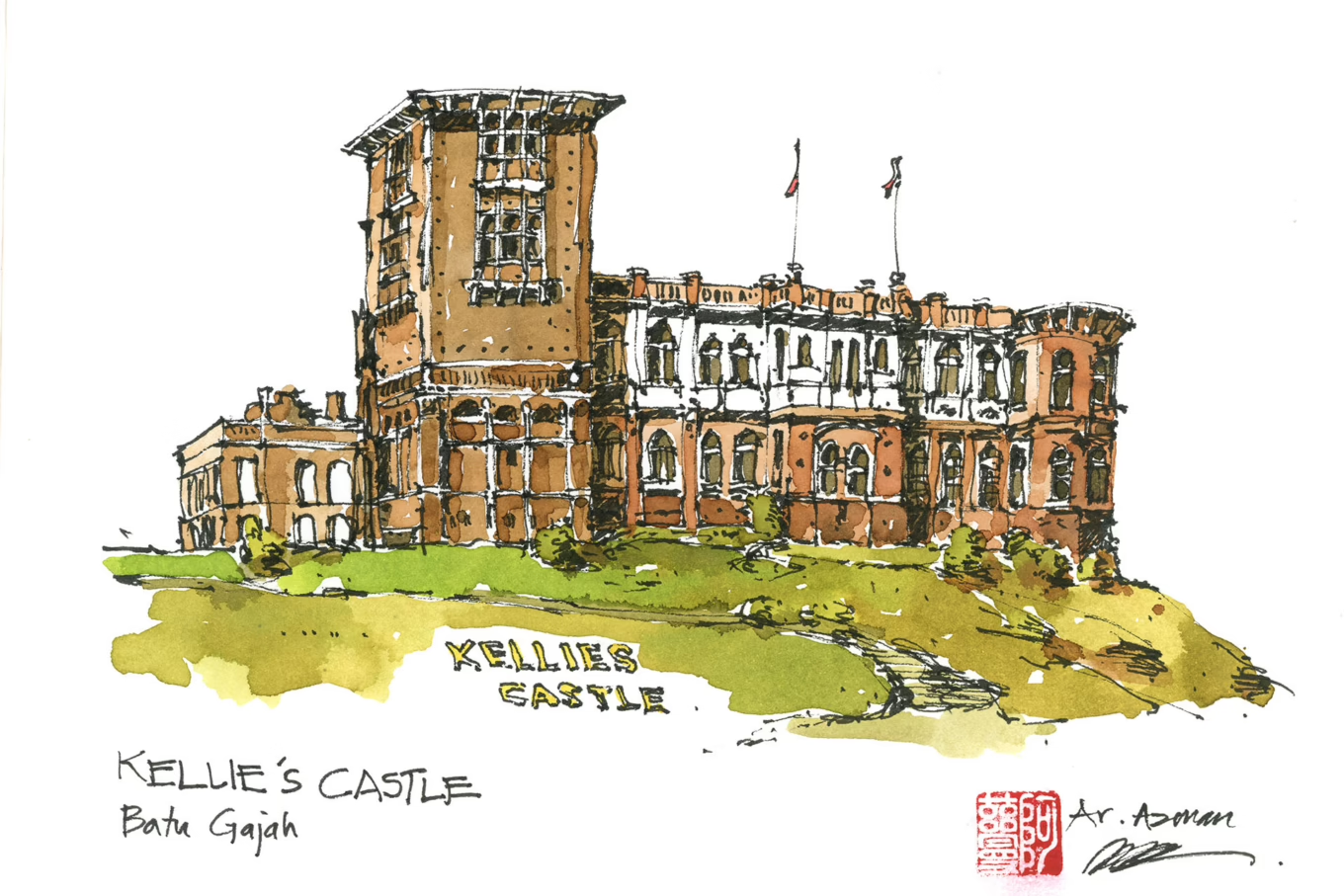
One of Malaysia’s most romantic and mysterious architectural landmarks, Kellie’s Castle was built with roaring ambition, yet construction stopped before it could be fully realised. Its weathered textures and impressive scale are set beautifully within the tranquil landscape of Batu Gajah, Perak. Dato’ Azman readily admits that, given the chance, he would leave it exactly as it is.
“Its unfinished state is precisely what makes Kellie’s Castle historically significant. It tells a remarkable story of ambition interrupted by unforeseen circumstances, making the building far more powerful than if it had been completed,” he says.
“Conservation is not about finishing someone else’s dream. It is about preserving the authenticity of what history has left behind. Sometimes the absence of completion tells a richer story than completion itself.”
7. Lebuh Pantai Fire and Rescue Station, Penang
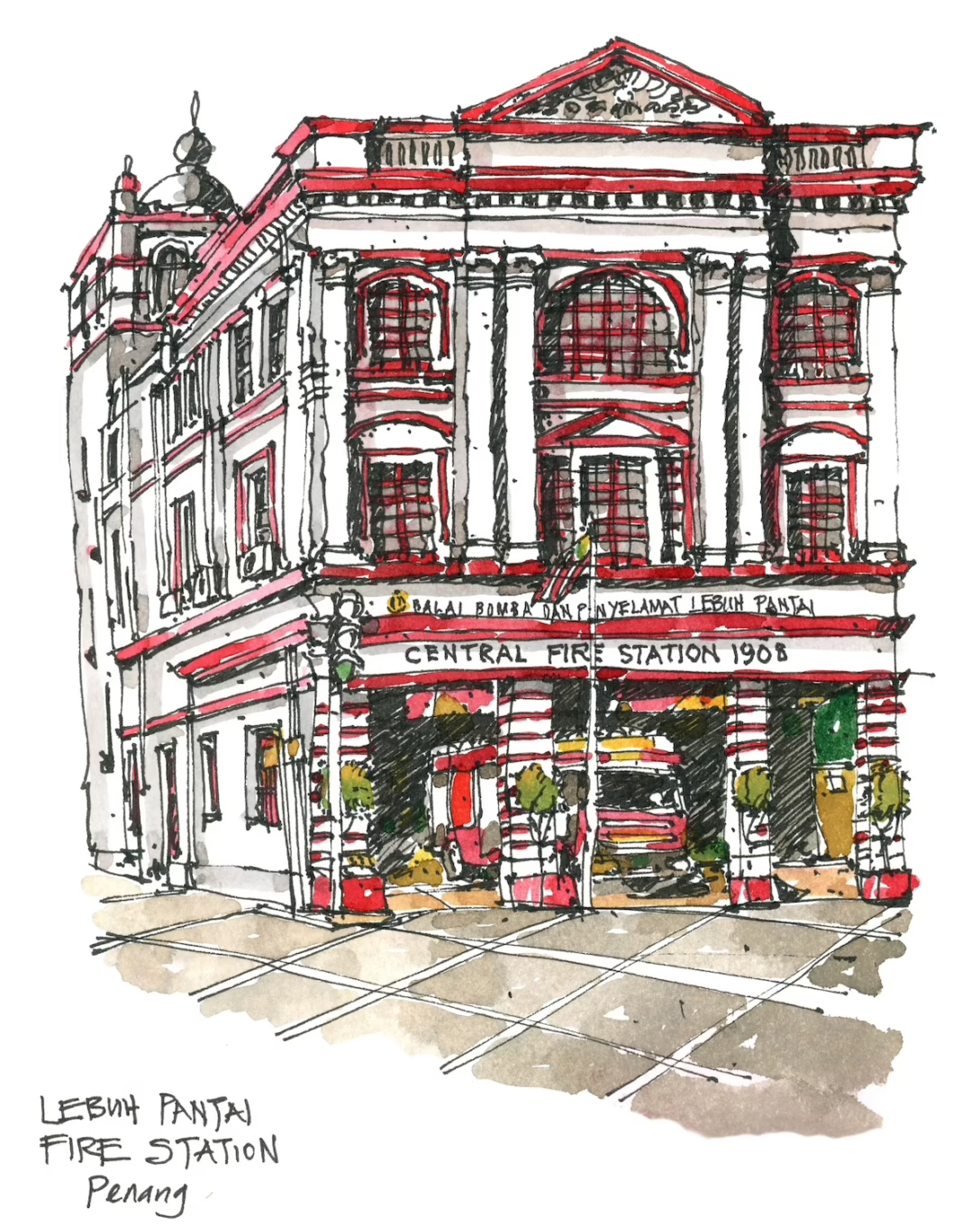
Holding the proud distinction of being Malaysia’s oldest operational fire station, the Lebuh Pantai Fire Station’s striking red-and-white façade reflects the confidence of colonial civic architecture. It represents public service, civic responsibility and the evolution of urban development – a reminder of how a city functioned and how communities were protected.
Because it continues to actively serve the community today, it stands as proof that heritage buildings are not merely dead monuments of the past but living institutions that continue to protect society every day.
Heritage should celebrate ordinary places because ordinary people have created extraordinary histories within them.