
Everyone warns you about the traffic in Jakarta first. But three days moving between Kota Tua’s colonial rooms, a batik atelier and a hotel built like a sanctuary taught me to listen for the quiet
Photos by Alisha Shaharuddin
Jakarta announces itself before you’ve even left the airport road. Gridlock. Density. The sprawl outsiders always mention first. None of that’s untrue, exactly. It’s just not the whole story. Spend a few days here moving through the city’s interiors instead of its intersections, and something else starts to surface. A Jakarta built on rooms, not roads.
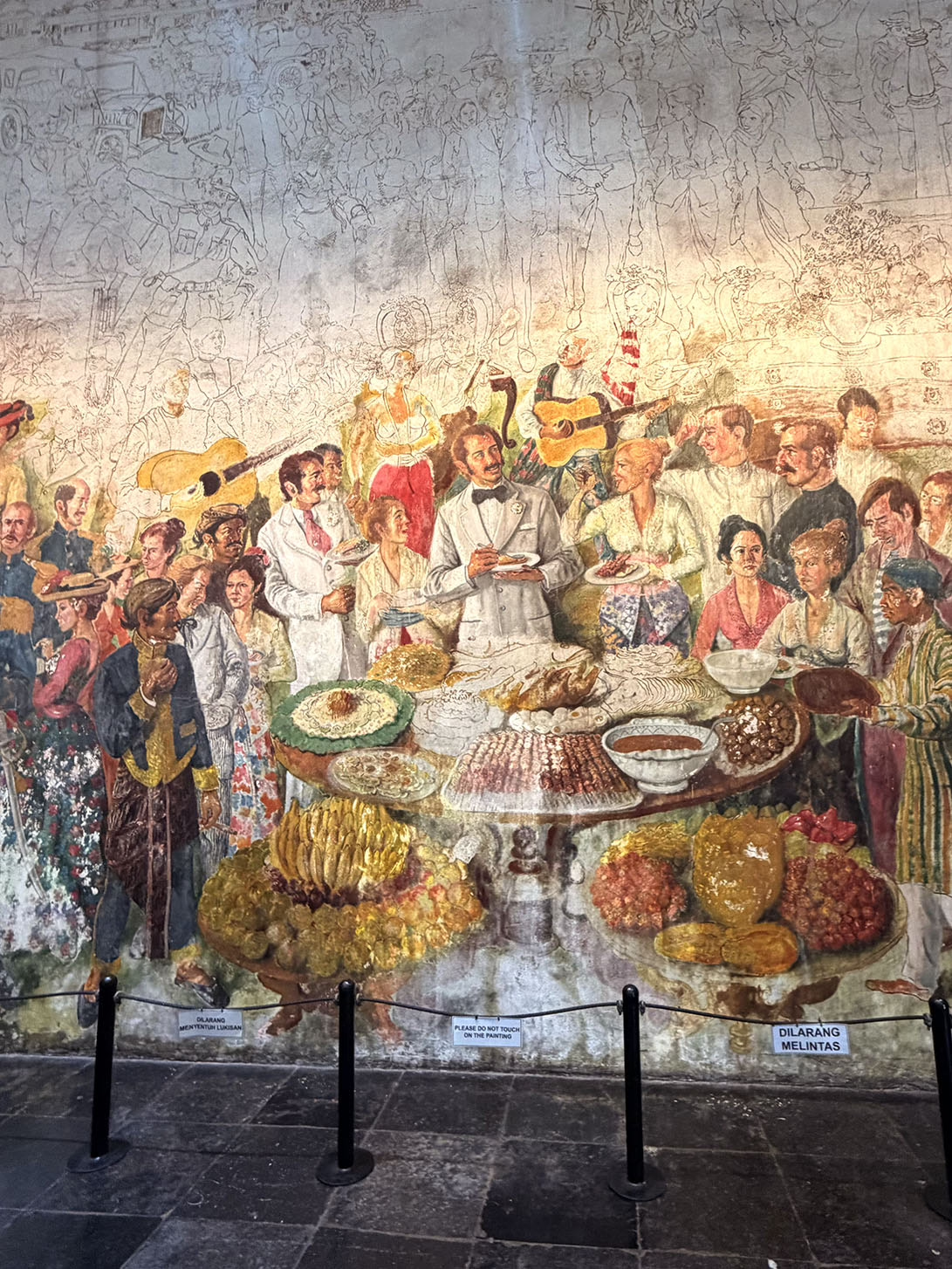
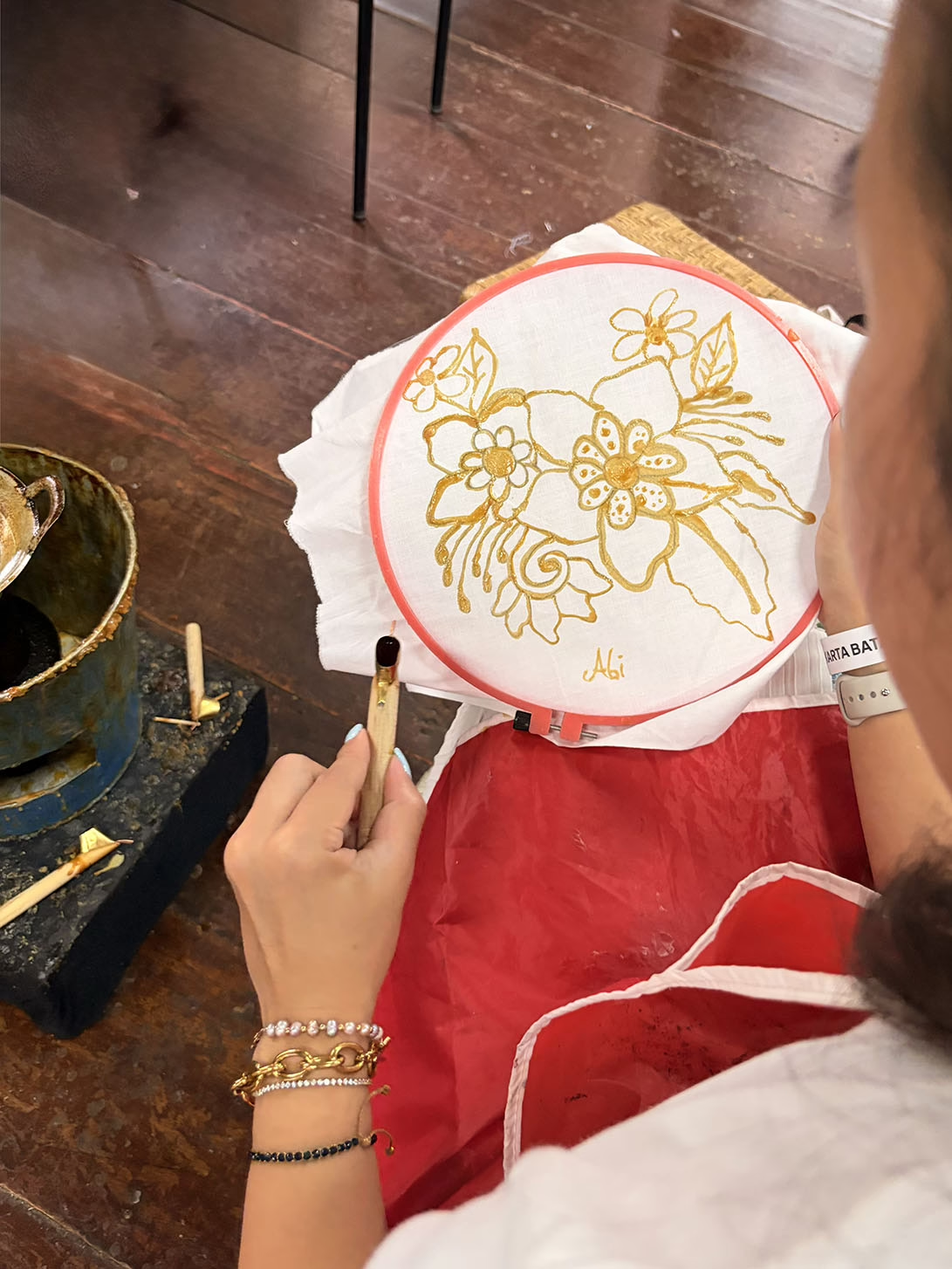
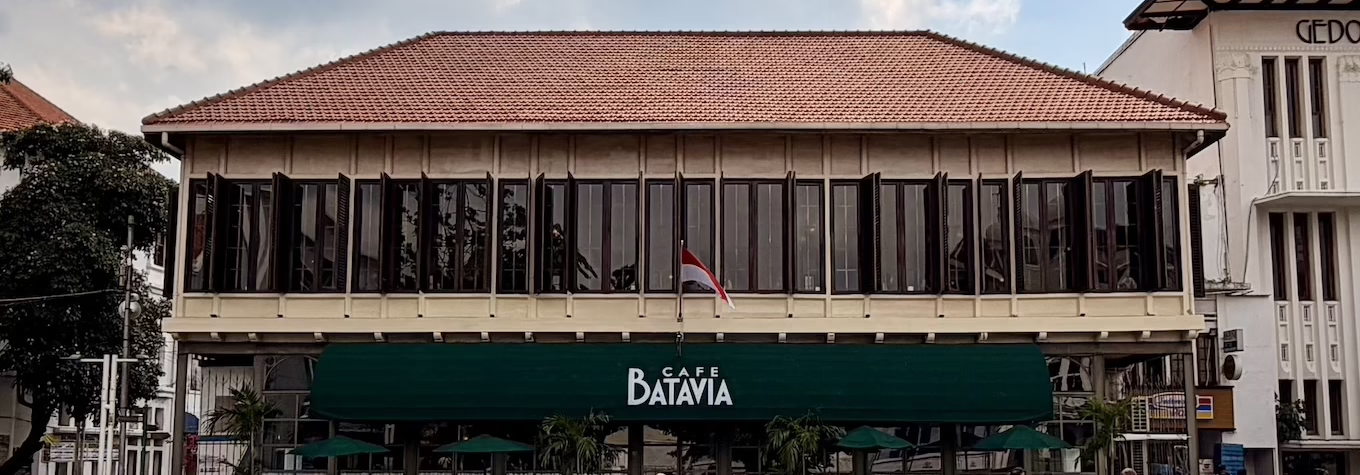
Fatahillah Square is where I first felt it. Step inside the 18th-century walls of the Jakarta History Museum and the square’s noise just falls away. Batavia-era maps, old furnishings, a stillness that has nothing to do with what’s happening outside the door. A short walk further, the Textile Museum’s batik gallery slows things down even more. Canting (a wax-filled pen used to draw batik patterns) in hand, a thin trail of wax dragging across cotton, there’s no rushing. This, I realised, might be Jakarta’s real secret: its actual pace lives behind closed doors, not out on the avenues.
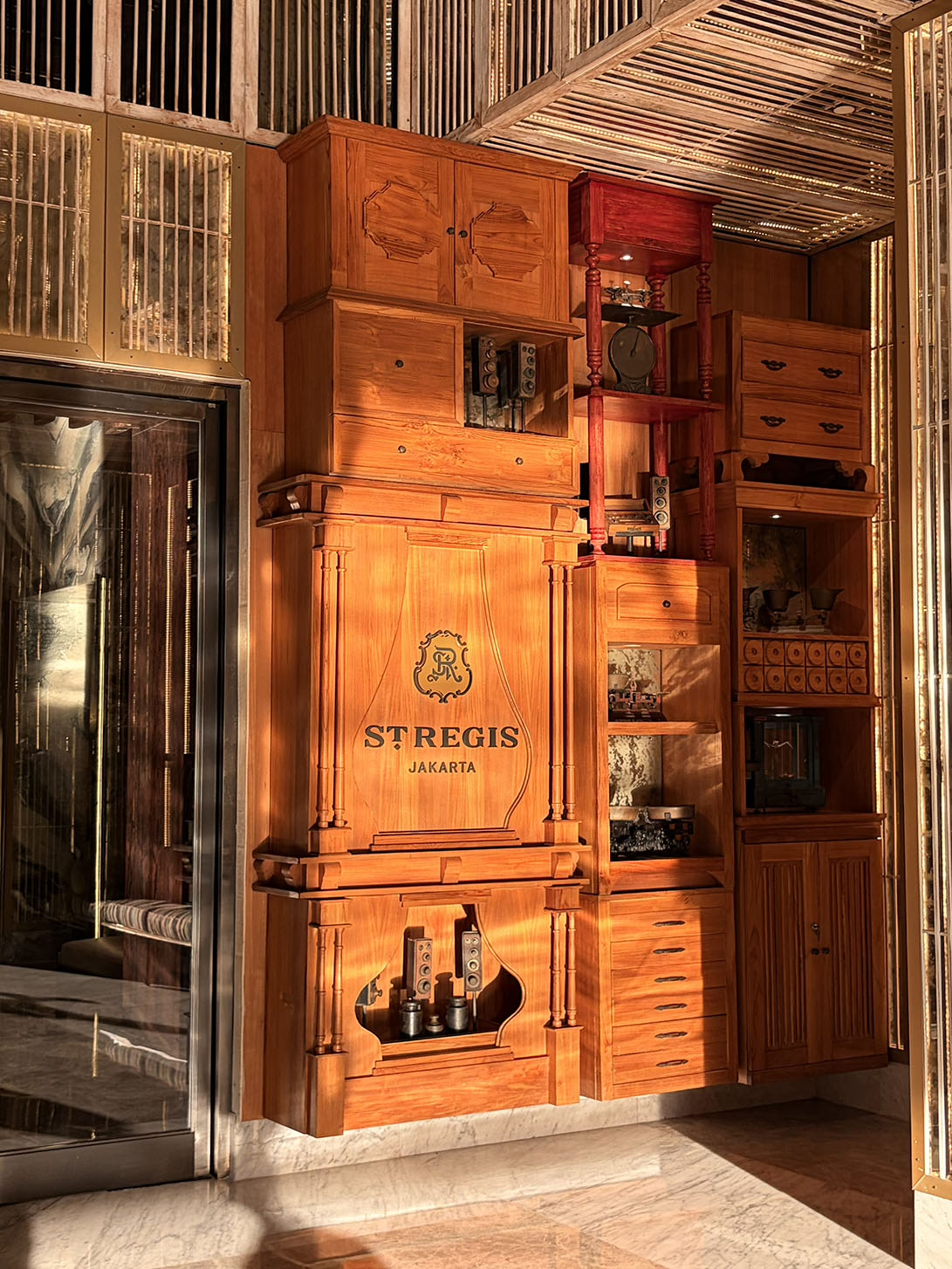

That logic followed me back to where I was sleeping. At The St Regis Jakarta, dusk doesn’t simply arrive, it’s performed. Each evening in the lobby, the Sound of Light ritual plays out in a composed run of light and sound, before tipping into the St Regis Sabrage, when a butler draws a sabre across a champagne bottle. Down the hall, an Indonesian feast unfolds beside a Betawi dance performance. Later still, a jazz bar tuned to 1920s New York feels like a second city tucked inside the first, one you’d never find from the street.
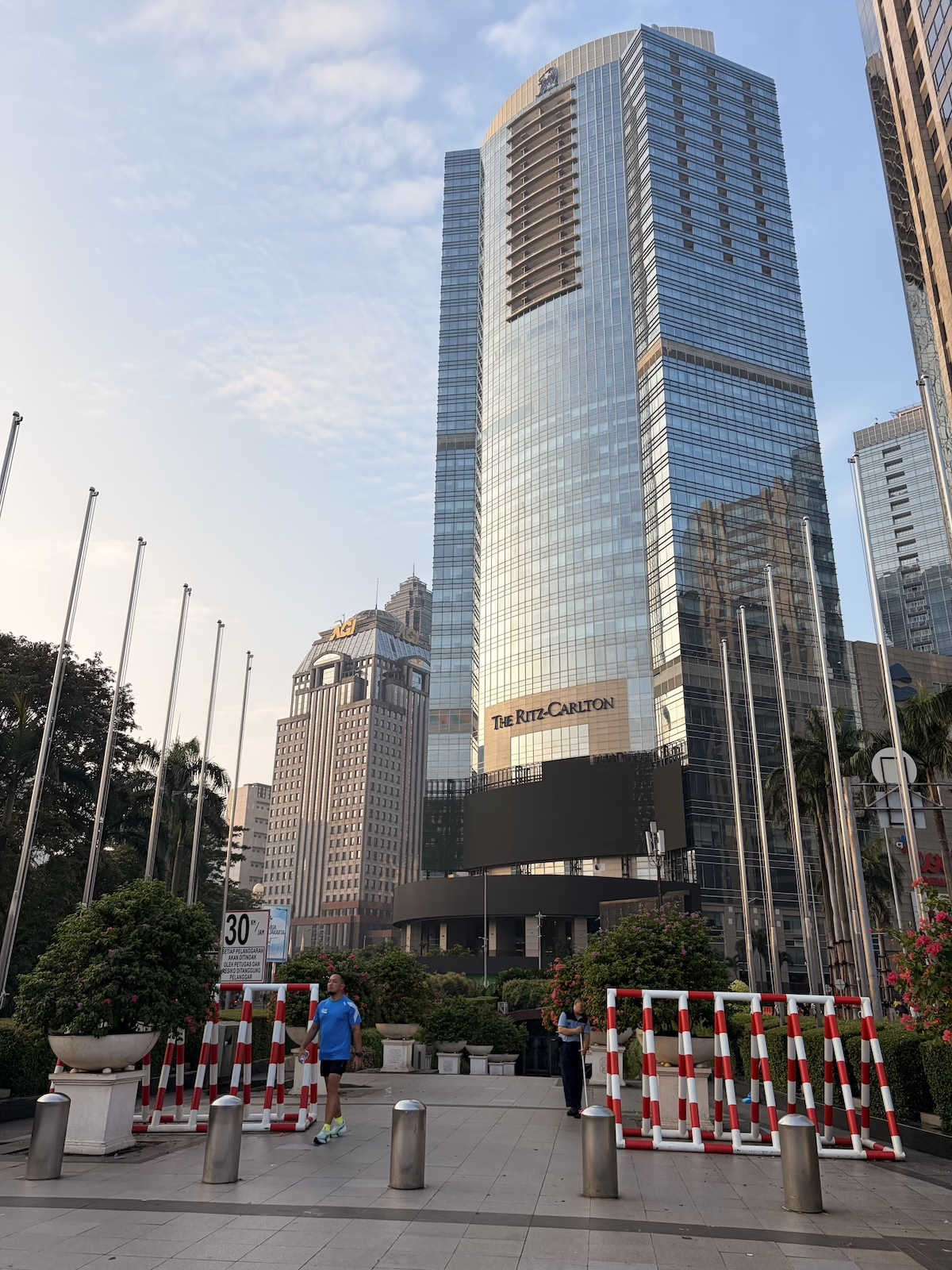
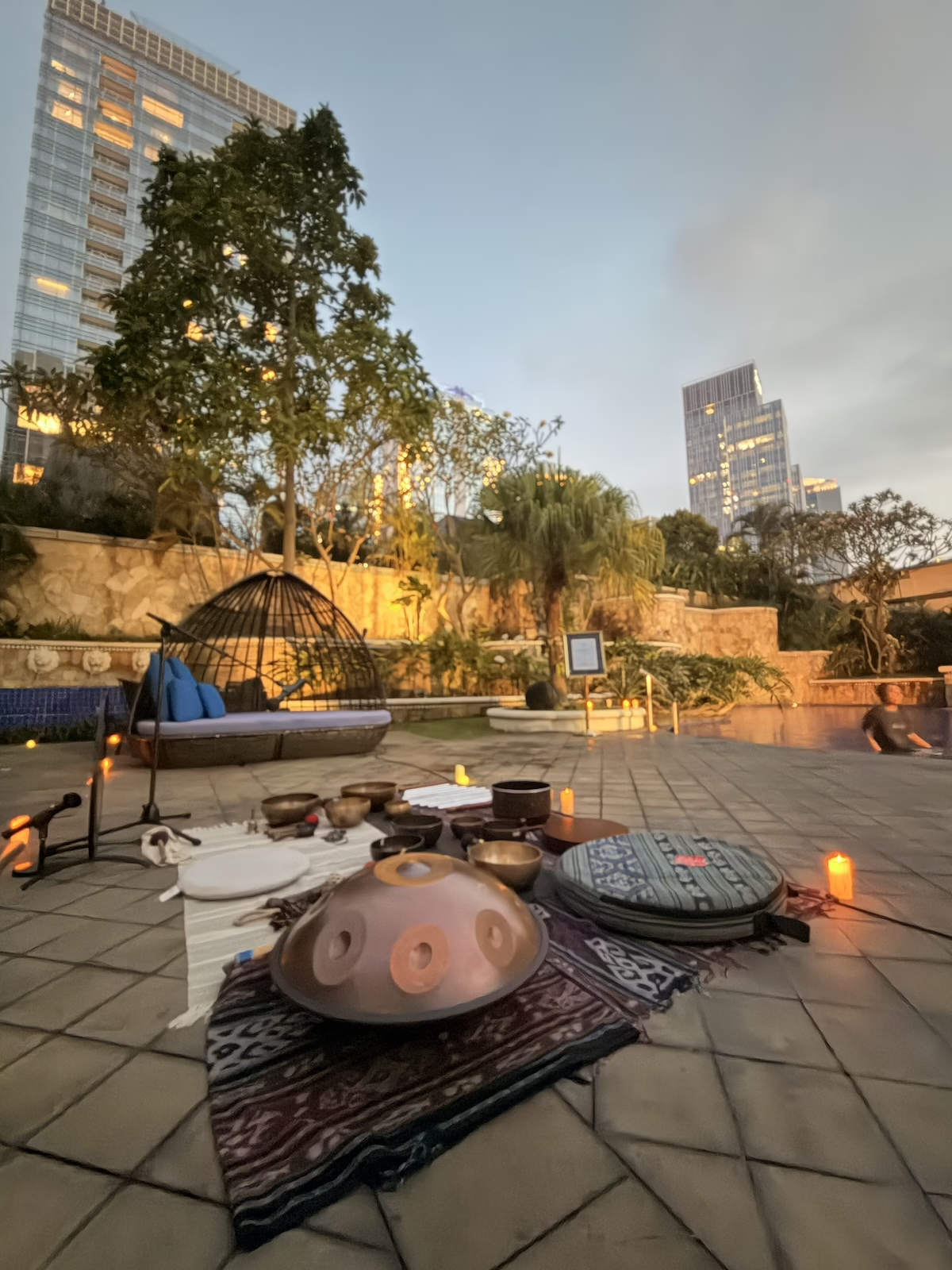
Across town, The Ritz-Carlton Jakarta, Pacific Place, does something similar, only quieter. One evening, a sound healing session has guests floating in the pool while the vibrations from crystal bowls hum across the water. The next day, a curated Indonesian lunch at the Glass House turns, almost without warning, into a live cooking demonstration. Spices laid bare under open, sun-filled ceilings.
Jakarta’s chaos, I learned, is entirely a street-level condition. Everything worth finding happens once you’ve stepped through a door
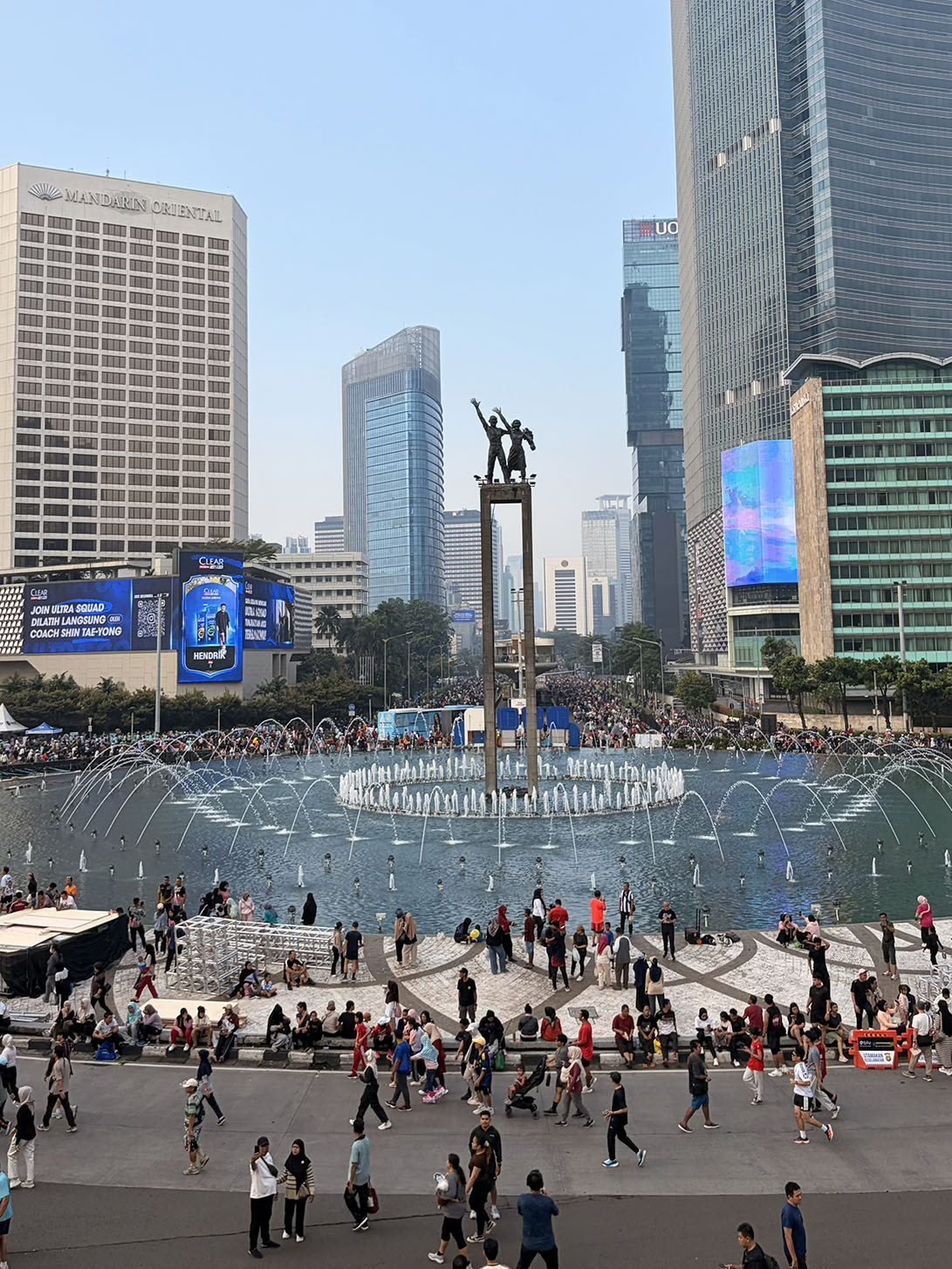

By my last morning, I thought I had the city figured out. Then Sunday happened. The road outside the hotel, usually packed with cars, had been handed back to the people who actually live there. Joggers. Families on bicycles. A kid on rollerblades weaving past a food stall that hadn’t been there the day before. For a few hours, Jakarta’s chaos wasn’t gone, it had simply changed shape. The street itself had become a living room.
The gridlock is real. Turns out, so is everything sitting quietly on either side of it.